How to draw an eye
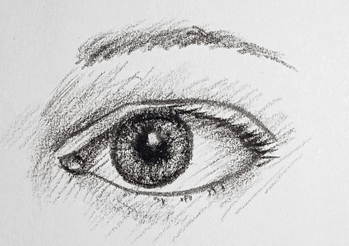
Drawing an eye is challenging, but with a few tips you can improve your eye drawing technique. Naturally I’m referring to both eyes, one at a time. You can see in the drawing below a very simple drawing of an eye. Nobody can deny that this is the drawing of an eye. Nevertheless, today you will learn how to do a more realistic eye

So, we start with a basic structure. Notice on the left the lacrimal or tear duct of the eye. This, of course, is the left eye

A significant point about the eye is its oblong shape and that the top curved line repeats itself for the lower lid, only upside down
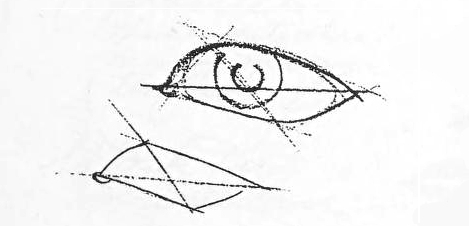
Now, we add the iris to our eye. It is important to be aware how much the upper and lower lids cover the iris, or perhaps the eye lids are not covering the iris at all which would mean the eye is wide open.

Next, we add the pupil, which is the black circle inside the iris. It also helps to add the shiny reflection of a light source, it gives the eye certain three-dimensionality

Then we add the upper eyelid and start darkening our iris and give form to the tear duct. We use some shading on the eyelids and on the corner closer to the nose bridge. Let’s give the sclera (white of the eye) some rounded shape by shading it on each side

We just draw the eyelashes, the eyebrow and more shading to give the drawing the sense of form to finish the realistic eye
.

Draw a few eyes using the tips that you have learned. You can practice by copying drawings of eyes from portraits done by the masters here. Remember to observe first and compare to your drawing and then make corrections until you get the ideal drawing of an eye. In the end no eye is the same, eyes are particular to each person. Keep on drawing. Practice makes perfect.
Value
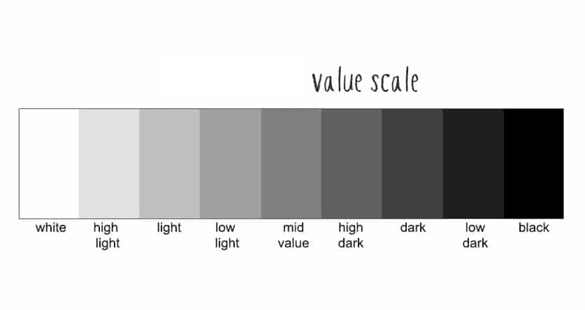
What is value? Value is the lightness and darkness part of a drawing. Value gives dimension, depth and form to a portrait, or any artwork. Basically, value is the grays in between the white and black spectrum. We express value through shading. We should be able to determine the location and intensity of the value on the face of a sitter to build a portrait. The picture below shows a value scale
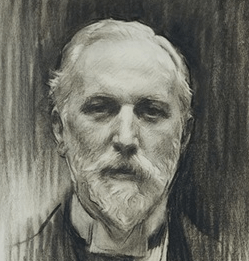
This Sargent sketch shows the basic range of value on the man’s face. The darkest value is on the eyes, under the nose, and the mouth. (There are other darker areas like the background and the jacket, but we’re focusing on the face only). You can distinguish the light value on the hair, forehead and cheekbones. Using the varied value gives shape to the face. Lines are not necessary.
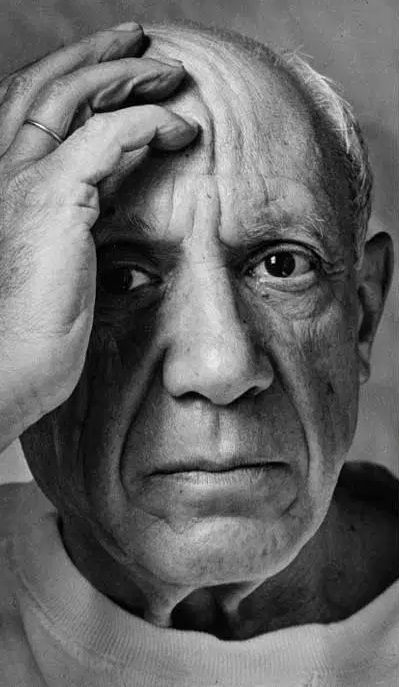
This picture of Picasso’s face shows a variety of values, from very dark to very light. It should not be hard to identify the different values on his face
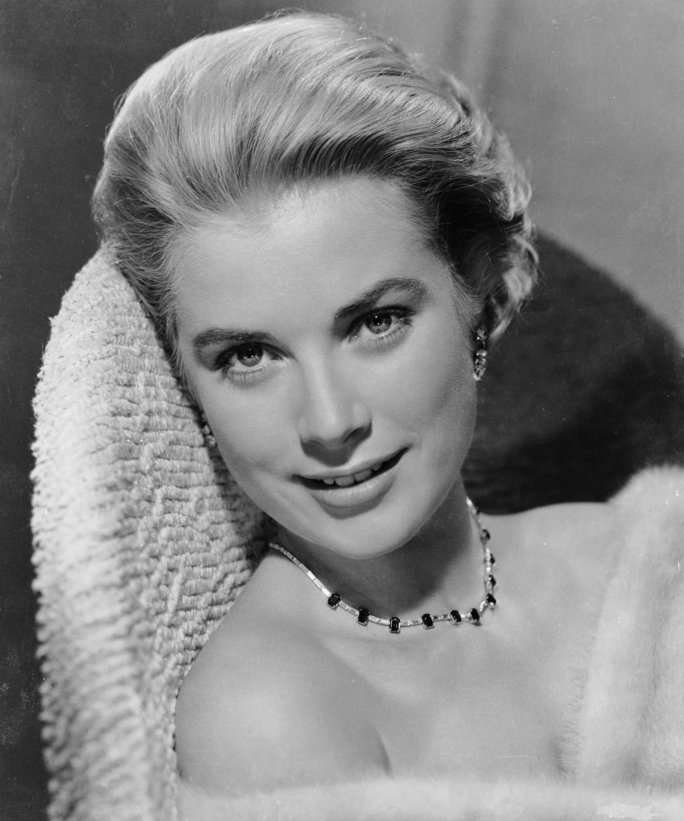
This picture of Grace Kelly shows a face with a mostly uniform value. But in reality, there is a lot of light shading. Can you identify the different levels of value in this picture? Better yet, can you sketch a portrait of your favorite person using the values learned here?
 The Artist On The Hill